New Jersey runs one of the widest plate programs in the country, and the choices reach well past the standard design. The MVC groups every tag into a class, and each class carries its own serial prefix, its own legend, and its own set of rules. A driver who reads the prefix on a plate can tell at a glance whether the vehicle hauls freight, marks a collector car, or belongs to a state office.
The list below covers every family the state issues today, from the standard passenger pair to a dealer tag, a farm plate, and a low-speed vehicle. Some classes carry a short serial and others run a long format with letters mixed through the digits. This page sorts the groups, explains the prefix that marks each one, and points to the plate that fits a given driver.
How New Jersey Sorts Its Plates
The MVC splits its plates into two broad groups before it sorts anything else. A passenger tag serves a private car, and every other class sits on the non-passenger side. The prefix on the face tells an officer which group the vehicle belongs to.
Passenger and Non-Passenger Groups
A standard car, a van, and a light SUV each take a passenger plate with a three-letter, three-digit serial. A truck, a bus, a trailer, and a motorcycle fall into the non-passenger side. The MVC assigns a different prefix to every non-passenger class so the two groups never collide.
The Serial Prefix Code
State law asks for a prefix on every New Jersey License Plate that identifies the class, and the MVC picks the letters. A commercial rig opens with an X, an omnibus run starts with an O, and a historic car carries the stacked Q/Q pair. The letters sit at the front of the tag on a non-passenger plate rather than in the middle of the serial.
New Jersey License Plate Families
The table below lists each family the MVC issues, the marker that identifies it, and the vehicles it serves. A reader can scan the rows to find the class that matches a given vehicle.
| Plate Family | Marker on the Tag | Who Uses It |
|---|---|---|
| Standard passenger | Garden State legend, A12-BCD serial | A private car, van, or light SUV |
| Commercial | COMMERCIAL legend, X prefix | A business truck or van |
| Omnibus | OMNIBUS legend, O prefix | A bus or a shuttle |
| Trailer | T worked into the letters | A towed unit with no engine |
| Dealer | D prefix, several blocks | A dealer or a repair shop |
| Motorcycle | MC prefix | A two-wheeled vehicle |
| Historic | Stacked Q/Q prefix | A car at least 25 years old |
| Street rod | R prefix | A modified antique |
| Specialty | Emblem and a set format | A club or a cause |
| Agricultural | Farm block, per the class | A farm truck or a tractor |
| Apportioned | IRP card in the cab | An interstate carrier |
| Temporary | Paper tag | A buyer or a new resident |
| Personalized | Owner’s own characters | Any driver who wants a message |
| Government | County or state block | A public agency |
The legend on the plate matters as much as the serial, since a clerk reads both before a registration goes through. A specialty design carries a small emblem on the left, and a dedicated plate shows the group name along the bottom edge. A marker that fades or peels can send a driver back for a remake even when the serial stays clear.
Standard Passenger Plates
A passenger plate covers the largest group of vehicles on the road, and the design has changed a few times across the decades. The current base replaced an older finish that many drivers still recall.
The Garden State Base
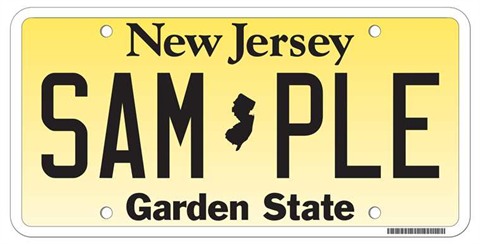
The current tag shows the state name along the top and the words “Garden State” beneath the serial. The fade runs from a pale yellow at the top to white at the bottom, and the serial sits in the center. A standard pair carries no emblem and no legend beyond the state line.
The Standard Serial Range
A passenger serial uses three letters followed by three digits, laid out as A12-BCD. The MVC cycles through the range as registrations come in, and a fresh block opens once the old one fills. A personalized tag replaces the middle characters, and the base design stays the same.
Commercial and Business Plates
A business vehicle takes a tag from a class of its own, and the state ties the amount to the weight of the truck. The class list covers a delivery van, a dump truck, and a tractor that pulls freight across several states.
The X Prefix Classes
A commercial serial opens with the letter X, and a current layout runs as XBC-D12. The MVC adopted that shape in the middle of 2012, and it holds a block for farm trucks inside the same series. A carrier reports the gross weight and the registration code before the plate goes out.
Trailers, Omnibus, and Dealer Tags
A trailer carries a single rear tag with a T worked into the letters. A bus or a shuttle takes an omnibus plate in an OBC1234 shape. A dealer holds a D block, and the state splits that block between new car lots, used lots, and repair shops.
Motorcycle, Trailer, and Low-Speed Plates
A few classes serve vehicles that sit outside the car-and-truck split. Each one carries its own serial shape and its own registration rule.
The Motorcycle Series
The motorcycle license plate takes an MC prefix and a smaller face than a car tag. The state issues one plate for the rear of the bike. A rider registers the machine in the same visit as a car, and the counter pulls the record from the title.
Low-Speed and Special Classes
A low-speed vehicle runs on a short-range electric or gas motor, and the state limits it to roads with a low posted limit. A class like this takes a marker of its own on the face. A driver checks the class rule before the vehicle goes onto a public route.
Collector Plate Options
A collector class serves an old vehicle that sees limited road time, and the state offers a few finishes for the same record. The age test holds steady across the group.
Historic and the QQ Series
A historic plate covers a vehicle at least 25 years old, and the serial carries the stacked Q/Q pair from QQ-1000 through QQ-99999. The class limits the car to show, club, and repair runs. A collector keeps the vehicle as a display piece rather than a daily rider.
Street Rod and Courtesy Historic
A street rod plate serves an antique with a changed body, and the serial opens with an R. A courtesy historic tag dresses the record in a period finish picked from a state list. A collector who keeps the car stock picks the plain historic design.
Specialty and Dedicated Plates
A dedicated plate carries a cause or a club name, and the state approves each design before it goes on a car. The group covers a college, a sports team, an armed service branch, and a conservation program.
The Dedicated Series
A dedicated tag shows an emblem on the left and the group name along the bottom. The MVC approves a sponsor first, then sets the design and the format. A driver orders the plate through the same counter visit as a standard registration.
Sports and Organizational Tags
A sports design carries a team mark and a set layout, and a personalized version allows a short message. An organizational plate serves a club, a lodge, or a service group with a state charter. Each design keeps its own character rule.
Military and Veteran Plate Options
A service member or a veteran can pick from a set of designs that mark a branch, a unit, or a specific award. The state treats each one as a dedicated plate with its own rule.
Branch and Guard Designs
A design exists for each branch of the armed forces, and the state issues a National Guard tag for a member of that unit. A reserve plate serves a driver who trained with a reserve command. A holder files the same registration packet as any other driver.
Medal and Recognition Tags
A few designs honor a specific award, and the state drops the plate charge for the highest ones. A holder still pays the registration amount on the vehicle. A family member of a fallen service member can apply for a Gold Star tag.
Agricultural and Farm Plates
A farm vehicle takes a plate from a block the state keeps apart from the business series. The class follows the work the machine does rather than its size alone.
Farm Trucks and Tractors
A farm truck takes a code of its own, and an agricultural tractor takes another. The MVC reserves a set of character blocks for the group so a plate never overlaps with a commercial serial. A farm plate lets the owner move goods between fields and a nearby market.
The Restricted Use Rule
A farm tag covers work around the property and a run to a local market, and it does not cover general freight hauling. A driver who takes paying loads outside that range needs a commercial record. The state reads the pattern of use across a season.
Government and Exempt Plates
A public agency holds its own set of plates, and the group sits outside the fee structure a private driver follows. The blocks stay separate from every other class.
County and Municipal Tags
A county vehicle carries a block the state assigns to that county, and a municipal vehicle carries one for its town. The plates run a set format that an officer reads at a glance. A police unit and a public works truck each fall into this group.
State Government Tags
A state office holds a block of its own, and the design stays plain rather than carrying a county marker. An exempt plate on a state car follows the same registration process as a private one. The agency handles the paperwork rather than the driver.
Temporary and Vanity Options
Two options sit outside the standard classes, and each one fits a short-term need or a personal touch. A driver meets either one at the counter.
The Temporary Tag
A paper tag covers a car for a short window until a title or a registration clears. A new resident and a buyer who waits on a title each use one. The tag shows an expiry date on the face.
The Personalized Line
A personalized plate swaps the middle of the serial for the owner’s own characters, and the state reviews the message before it goes on. A request can run on a standard base or on a dedicated design. The review blocks a pattern that reads as an official series.
How to Pick the Right Plate
The choice comes down to the work the vehicle does and the look the owner wants. The table below pairs a common situation with the plate family that fits it.
| Your Situation | Plate Family to Pick |
|---|---|
| A private car used for errands and a commute | Standard passenger |
| A van or a pickup used for a business | Commercial |
| A bus or a shuttle with paying riders | Omnibus |
| A two-wheeled vehicle | Motorcycle |
| A car 25 years or older kept for shows | Historic |
| A modified antique | Street rod |
| A tractor or a farm hauling truck | Agricultural |
| A rig that crosses state lines with freight | Apportioned |
| A vehicle waiting on a title | Temporary |
| A driver who wants a personal message | Personalized |
| A member of a club or a cause | Specialty or dedicated |
Match the Plate to the Use
A plate follows the job the vehicle does rather than the preference of the owner. A truck that hauls goods for pay needs a commercial record, and a car kept for shows fits the historic class. A wrong class leads to a correction at the next renewal.
Check the Prefix Before You Buy
A used vehicle often keeps the tag from its last owner, and the prefix shows which class that was. A buyer reads the serial before the sale closes. A plate that no longer matches the use needs a fresh registration.
Where to Confirm a Plate Option
The MVC publishes the current list of designs along with the format for each one. A driver can read the page before a counter visit rather than guessing at the window.
The Design List
The plate page, along with the license plate fees table, carries the live set of specialty and dedicated designs, and it updates as a fresh sponsor joins. A driver who wants a design that is not listed can contact the MVC about a sponsor request. A printed application repeats the same list in the same order.
The Format Notes
The same page notes the serial shape for each class, from the three-letter passenger form to the stacked Q/Q pair. A driver who checks the format avoids a mistake on the application. The notes match the blocks the MVC reserves for each group.
Plate Options by Vehicle Shape
The body of the vehicle decides which family applies, and a few shapes sit near a boundary. A driver checks the class before the registration goes in.
The Car and the SUV
A sedan, a coupe, a wagon, and a light SUV each take a standard passenger plate. The weight of the vehicle stays under the passenger limit, and the state treats the group as one. A larger SUV that crosses the limit can fall into a different class at the counter.
The Pickup and the Van
A pickup used for a business takes a commercial tag, and the same truck used on a private farm takes a farm plate. A cargo van follows the same split. The work the vehicle does decides the family rather than the shape of the body.
How the Plate Base Has Changed
The state has redrawn the passenger base a few times, and an older finish can still sit on a car that holds a live record. A driver reads the year on the card rather than the look of the tag.
The Older Bases
A plate from an earlier run can still sit on a car with a valid record, and the finish shows its age. The state does not force a swap onto the current base as long as the characters stay readable. A worn face can go through a remake if a marking fades.
The Current Palette
The tag on the road today shows a fade from pale yellow to white, with the state name across the top. The design carries a small security mark and a reflective coat on the face. The MVC prints the serial in a plain block rather than a script.
Picking a Design for a Family Car
A family car takes the plain passenger pair by default, and a driver who wants something else has a few routes. Each route keeps the same registration underneath.
The Plain Route
A standard pair adds nothing beyond the registration and arrives with the record. A driver who swaps cars often stays with the plain design so the plate moves with the vehicle. The state issues a fresh pair when the old one wears out.
The Personal Touch
A personalized tag, a specialty design, or a dedicated plate each dresses the same record in a different way. A personalized line lets the owner pick the characters, and a specialty tag shows a cause. The registration amount holds steady across the three.
What Comes With Each Plate
The MVC sends a package with the tag, and the contents shift a little from one class to the next. A driver knows what to expect before the envelope arrives.
The Plate Pair and the Card
A passenger car receives a matching pair, one for each end of the vehicle. A motorcycle and a trailer take a single tag for the back. The registration card arrives in the same envelope as the plate.
The Registration Sticker
A sticker carries the month and the year that the record runs through, and it goes onto the face of the tag. A specialty design leaves a clear spot for the mark. A driver who moves a plate to another car follows the state rule for the old sticker.
Frequently Asked Questions
The MVC hears the same questions from new drivers each month. The notes below settle the points that come up first at an order window.
How many license plate types does New Jersey offer?
The state issues well over a dozen families, from the standard passenger pair to a commercial tag, a trailer plate, and a collector design. Each family carries its own prefix and its own rule. The table above lists the main groups.
What do the letters on a New Jersey plate mean?
The letters mark the class rather than the driver. An X points to a commercial vehicle, an O to a bus, an MC to a motorcycle, and a stacked Q/Q pair to a historic car. A passenger serial uses three plain letters and three digits.
Which plate shows up most in New Jersey?
The standard passenger plate covers the largest group, and it shows the Garden State legend under the state name. A van and a light SUV take the same design. A specialty or a personalized tag replaces the middle characters.
Can I put a specialty plate on any car?
A specialty or a dedicated design fits most passenger vehicles, and the owner settles the class charge on top of the registration. A commercial truck or a motorcycle takes its own group of designs. A collector car follows the historic rule instead.
Where do I order a plate?
A driver orders at a Vehicle Center or through an online renewal, and a specialty design goes through the same counter visit. A new resident files at a counter with the title. The MVC mails the tag once the record clears.