
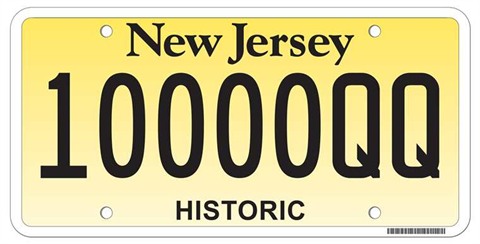
A New Jersey historic license plate marks a vehicle at least 25 years old that a collector keeps for show, club events, and the occasional errand. The state issues the tag through its historic registration class, and the serial carries a stacked Q/Q prefix that sets the plate apart from a standard passenger design. The MVC pairs that tag with a lighter registration path and a set of use limits, so the class rewards a preserved car rather than a daily rider.
Historic sits close to a few other collector classes, and each one fits a different owner. A courtesy historic plate dresses the same record in a period finish, a street rod tag serves a modified antique, and a plain plate stays on a car in everyday service. This page covers the eligibility test, the QQ serial, the use limits, the renewal cycle, and the current fee structure.
How to Get a New Jersey Historic Plate
A historic registration starts with the age of the vehicle and the way the owner uses it. The MVC reads the title, the photographs, and the completed application before the tag goes out. A collector who gathers the papers first moves through the process in one filing, and a short check of the form against the title heads off most delays.
- NJMVC Historic Plates:
- https://www.nj.gov/mvc/vehicles/historic.htm
What the Filing Asks For
Form SP-121 carries the request, and the owner signs it in front of a notary. The packet holds a copy of the New Jersey title, proof of insurance, and two color photographs that show the front and the side of the vehicle. A leased car adds a line for the lien holder, and a restored car adds no extra paper.
Where the Paperwork Goes
A collector files at a Vehicle Center or by mail to the MVC address in Trenton. A clerk then checks the photographs against the vehicle record and mails the plate once the file clears. A counter visit lets the clerk review the packet on the spot, which catches a missing page before the trip home.
What Counts as a Historic Vehicle
The state sets a simple age test and a second test that rests on the owner’s intent. Both must hold at the same time.
The 25-Year Test
The New Jersey License Plate historic class asks for a vehicle at least 25 years old when the application goes in. The MVC reads the model year on the title rather than the date of manufacture. A car built in 2000 qualifies in 2025, and the same rule covers a truck or a motorcycle.
The Collector Standard
The owner must keep the vehicle as a collector’s item rather than as everyday transport. The state looks at the mileage, the condition, and the way the car is stored. A rusted shell that cannot run misses the bar, and a restored car with a clean record passes with ease.
The Exhibition Purpose
State law ties the class to exhibition and educational use. A car shown at a club meet, a parade, or a museum display fits the purpose. A run to a repair shop counts as part of the upkeep, and the state treats that trip the same way.
What the QQ Prefix Means
The stacked Q/Q prefix is the mark most drivers mean when they say historic. The MVC issues that serial block only inside the historic class, so a QQ tag cannot sit on a car in daily service.
The QQ Serial Block
A QQ plate runs from QQ-1000 through QQ-99999, and the two letters sit stacked at the front. The MVC keeps the block apart from the standard passenger series. A collector who spots the stacked letters on another car knows the vehicle carries the restricted class.
Why the Q/Q Prefix Exists
The prefix gives a police officer a fast read at a glance. A tag outside the daily-use group should stand out from the standard set, and the stacked letters do that job. The same idea sits behind the street rod and the courtesy historic series, each with its own marker.
Historic vs Courtesy Historic vs Street Rod
Three collector classes share a love of old metal, and each one fits a different owner. The chart below sorts the tests, the use rules, and the look of each tag.
| Feature | Historic (QQ) | Courtesy Historic | Street Rod |
|---|---|---|---|
| Vehicle age | 25 years or older | 25 years or older | A modified antique of that age |
| Plate look | Stacked Q/Q prefix | A period finish picked from a list | An R prefix on a special base |
| Body condition | Original or restored | Original or restored | Altered from the factory build |
| Inspection | Exempt from the standard test | Exempt from the standard test | Exempt from the standard test |
A collector who keeps the car stock takes the QQ tag, and an owner who wants a vintage look takes the courtesy series. A modified build with a swapped engine or a chopped roof lands in the street rod class. All three share the same use limit and the same distance cap.
New Jersey Historic Plate Fees
The MVC charges one figure for the historic tag and a higher one for the personalized version. The table below lists the published amounts that apply to the class today.
| Historic Plate Item | Fee |
|---|---|
| Historic plate, initial | $44 |
| Courtesy historic plate | $74 |
| Personalized historic plate | $94 |
| Street rod plate | $15 |
| Collector vehicle decal, per issue | $25 |
| Standard replacement plate | $6 |
| Remake of an existing plate, Form SPU-89 | $11 |
| Dedicated or special interest replacement | $11 |
What the Renewal Covers
A historic record renews on a three-year cycle rather than every year. A reminder reaches the owner before the date, and the tag itself stays with the vehicle. A collector who keeps the same plate pays the amount printed on the card.
When Extra Charges Land
A few events lift the total above the base. A lapsed record adds a fresh charge when the owner brings it back, and a lost plate adds the replacement amount. A personalized tag adds its own line on top of the class figure.
The Mileage and Use Limits
The historic class trades freedom for a lighter path, and the trade shows up in the odometer. The state expects a collector car to sit more than it rolls.
The Yearly Cap
The MVC frames the class around exhibition use rather than a hard odometer reading. Most collector insurance policies cap the yearly distance at a modest figure, and the owner agrees to that cap when the policy starts. A car driven far past that cap starts to look like regular transport.
Trips That Stay Inside the Class
A run to a club meet, a parade, a museum, or a repair shop all fit the purpose. A short errand on a dry weekend sits at the edge, and the state reads the pattern rather than one trip. A collector who keeps a log of the events carries proof if a question comes up.
What Breaks the Limit
A daily commute, a long haul, or a job that asks the car to carry goods each pull the vehicle out of the historic intent. The MVC can move the car into the standard class, and the owner then follows the full registration path. A second car for the work week keeps the old one inside the class.
Inspection and Emissions Rules
A collector car sits outside the standard test, and the state grants that room for a clear reason. The class serves vehicles that see little road time.
The Inspection Exemption
A historic vehicle does not go through the regular inspection cycle, and the emission test does not apply to the tag. The state built that room around the limited miles the class carries. The owner keeps the paperwork on hand in case a stop raises a question.
What Still Applies
A safe vehicle still needs working brakes, lights, and a clean windshield, since those items protect the driver on any road. A roadside officer can question a car that looks unsafe, and the exemption does not cover a clear defect. The owner keeps the car in roadworthy shape across the year.
Historic Registration Renewal
A historic record follows a long cycle, and the owner has little to file at each turn. A few habits keep the tag active across the decades.
The Three-Year Cycle
The MVC renews the class on a three-year schedule rather than a yearly one. The agency mails a reminder ahead of the date, and the renewal can go through online or at a counter. A tag that renews on time keeps the same characters from the first issue.
Keeping the Record Alive
A lapsed historic record takes a fresh filing to restore, and the plate may need a remake at that point. A collector who pays on time holds the same serial across the years. A move to a new address goes to the MVC, which keeps the mailing location on the record.
Personalized Historic Plates
A collector can add a message to the QQ tag, and the state treats the plate as a separate product. The custom line sits above the class figure rather than inside it.
The Character Set
A personalized historic plate holds up to five characters, and the MVC blocks a pattern that reads as an official series. A space and a hyphen each take a slot, so a plate with both leaves fewer for the message. The request goes through the same review as a standard personalized tag.
What Changes on the Plate
The custom characters replace the middle of the serial, and the stacked Q/Q stays at the front. The finish and the color follow the historic base rather than the standard one. A collector keeps the same design across a renewal.
Historic Plates and Insurance
An insurer reads a historic vehicle as a low-distance collectible, and the policy reflects that view. The rate and the coverage terms both shift with the class.
The Collector Policy
A collector policy limits the yearly distance and asks the owner to store the car in a locked space. The premium runs below a standard policy for the same vehicle, since the risk drops with the limited use. A policy of this kind matches the state’s intent for the class.
The Daily-Driver Policy
A standard policy on a historic car can raise a question at a claim, since the mileage and the use may not match the coverage. An owner who plans to drive the car often reads the terms before picking the class. A call to the insurer settles the fit.
What a Historic Plate Cannot Do
The class carries limits that follow from the lighter registration path. An owner who plans around those limits stays inside the rules.
No Hauling for Hire
A historic vehicle cannot carry goods for pay, and the tag does not cover a business run. A delivery route or a ride service both sit outside the class. A vehicle that earns money needs a commercial or a standard record.
No Regular Commute
A daily trip to a workplace does not fit the exhibition purpose. The state reads the pattern across weeks rather than a single morning. A car that sits in a commuter lot five days a week invites a review.
Buying and Selling a Historic Vehicle
A collector tag adds a step to a sale, and the plate itself follows a rule of its own. The buyer and the seller each hold one duty.
The Tag Stays With the Vehicle
A QQ plate belongs to the car in most cases, so a sale passes the tag to the new owner along with the title. The buyer then files for the record in their own name. A seller who keeps the plate hands it back and lets the state cancel the serial.
A Sale Inside the State
A sale between two New Jersey owners, the kind the old license plates for sale market tracks, moves the title at a Vehicle Center. The buyer settles the title figure and the class amount, and the MVC issues a fresh card. The plate stays on the car when the buyer keeps the historic class.
How the MVC Reviews a Historic Filing
A clerk reads the packet against the vehicle record, and two checks decide the outcome. A clean file moves to the plate room within a few weeks.
The Document Check
The reviewer matches the name on the application to the name on the title. A mismatch, an unsigned form, or a stale insurance card each holds the file. A collector who copies the title exactly avoids the hold.
The Photograph Review
The clerk compares the pictures to the make and the model on the record. A photo that shows a different body style raises a flag. A clear shot of the whole car, taken from an angle, answers the question before it starts.
Historic Plates for Trucks and Motorcycles
The historic class covers more than a passenger car, and the same age test applies across the board. A vintage truck and an old motorcycle each follow Form SP-121.
A Vintage Truck
A pickup or a light hauler at least 25 years old fits the class when the owner keeps it for shows. The MVC applies the same title and photograph rules that a car follows. A truck that still works a delivery route each day does not fit.
A Classic Motorcycle
A motorcycle meets the same 25-year bar, and the tag carries the QQ block at a smaller size. The state issues a single plate for the rear of the bike. The owner files the same packet as a car owner.
Getting an Old Car Ready for the Historic Class
A project car often needs attention before the state will take it into the class. Three items decide whether the file clears on the first pass.
The Mechanical Check
A car must start, stop, and steer before the plate goes on. A machine with no brakes or a cracked frame misses the bar. A collector who finishes the running gear first avoids a second review.
The New Paint and Trim
A fresh finish and complete trim help the photographs in the packet. The state does not demand a show-quality job, and a clean driver-grade look passes. A missing bumper or a bare metal patch draws a question from the reviewer.
The Paperwork for a Project
A car bought as a project needs a title in the owner’s name before the historic filing. A bill of sale alone does not carry the record. A collector transfers the title first, then adds the historic tag in a second step.
Moving a Historic Car Into New Jersey
A collector who relocates with an old car files for a New Jersey title and the historic class in one pass. The state applies its own age test rather than the rule from the former home.
The New Title
The owner turns in the out-of-state title and takes a New Jersey certificate. The MVC reads the model year from that document for the 25-year test. A car already on a historic tag elsewhere still goes through the local filing.
The Old Plate
A plate from the former state stays off the road once the New Jersey record starts, and it joins the license plate history of the car. A collector keeps the old tag for display in a garage rather than for the bumper. The state issues the QQ set once the packet clears.
After the Historic Plate Arrives
The MVC mails the tag and the registration card in one envelope, and two steps follow. A collector who handles both at once keeps the record clean.
Fitting the Plate to the Car
A frame must leave the face of the tag open, and the mounting holds the plate flat against the body. A bent corner or a cracked bracket can hide a marking and draw a question at a stop. A clear guard keeps the serial and the sticker in view.
The Registration Card and the File
The state sends the card with the tag, and the owner keeps it inside the car. The card and an insurance proof belong in the glove box for a roadside check. A collector stores the signed SP-121 copy and the title at home in a safe place as well.
A Note on the Renewal Date
The card prints the month when the record comes due, and a collector marks that date on a calendar. A reminder set a few weeks early leaves room for a mail filing. A tag that sits past the date takes a fresh packet to bring back.
Frequently Asked Questions
The MVC hears the same points from collectors each week. The notes below settle what a first-time applicant usually asks about the class.
What makes a car eligible for New Jersey historic plates?
The car must have reached its 25th year, and the owner keeps it as a collector’s item for exhibition use. The MVC reads the model year from the title. A restored or original car passes the check, and a rusted shell that cannot run does not.
What are QQ plates in New Jersey?
The stacked Q/Q prefix marks the historic class, and the serial runs from QQ-1000 through QQ-99999. The MVC issues that block only for a vehicle at least 25 years old. A QQ tag sits outside the standard passenger series.
How much do historic plates cost in New Jersey?
The initial historic plate carries a published figure, and a courtesy historic or personalized version costs more. The table in the fee section above lists the exact amounts. A replacement or a remake follows its own line.
Do historic plates need inspection in New Jersey?
A historic vehicle skips the standard test, so the emission check never applies. A safe car still needs working brakes, lights, and glass. A roadside officer can question a vehicle that looks unsafe.
How often do historic plates renew?
The class renews on a three-year cycle rather than a yearly one. The MVC sends a reminder before the date, and the same tag stays on the car. A lapsed record takes a fresh filing to restore.